




When I first landed in South Africa, I was overwhelmed by the privilege I have to be able to travel across the world and experience this new land, cultures, and peoples entirely through Yale’s funding. As we went through the exhibitions, this feeling of being overwhelmed increased, almost suffocating me as the ignorance I had was laid bare. I realized that I was sitting and walking on the unheard cries and trauma of those who were enslaved, stripped of their names, identities, and humanity, and those who were internally displaced through state violence.
We take for granted so many things: our health, our fortunes, our family and friends, and something as “little” as our name. We sometimes even feel entitled to these things, and our trip to the Slave Lodge reminded me and showed me what it’s like for a vicious system to strip these things from someone and to truly capitalize on the physical and psychological cages it constructs. I felt angry at how the dignity and worth of a person, as well as all that we can know about the enslaved people, can be written on a small card with descriptions like “strong boy” or “strong young one.”
But I find it so inspirational that, as humans, we have the ability to reclaim and rebuild the ways in which these systems can oppress us. A clear example of this is one of the exhibitions in the Slave Lodge about the use of the calendar to name slaves and how individuals with last names like “Februarie” or “April” are the legacies of enslaved individuals brought to Cape Town. I found it so beautiful to see the strength of the people in the exhibition in turning these lingering and traumatic results of slavery into a lesson about not taking our heritage and our roots for granted.
Yesterday, at the Human Right Symposium, there was a baby that was crying and the caretaker was asked to step out with the baby to which a man intervened and opposed the idea. While asking the caretaker to step out made practical sense to preserve the environment, the moment made me uncomfortable. Today, my perspective shifted during our visit to Robben Island. Our bus guide, Yasin, shared how prisoners were completely isolated from the sight and sound of children. He loosely quoted Nelson Mandela, noting that the cry of a child is something we deeply take for granted. At that moment I was taken back to yesterday where the baby was taken out of the room. I wonder about the man who stood up to authority. Perhaps his own history compelled him never to take those sacred sounds for granted. I get sad thinking about the baby’s caretaker who traveled to participate in the difficult but necessary conversation, only to be asked to leave the room. But ultimately, I think these two moments are lessons for me to balance our societal need for order with more sensitivity and empathy.
As I reflect on my first week, I find it hard to articulate the feelings, emotions, and senses I have experienced to my friends and family back home. I resort to sending quick inadequate updates like “At Robben Island where Nelson Mandela was imprisoned”, unable to and unwilling to summarize the history, struggle, and not to take for granted the richness in all that I am learning. Even as I try to find a way to end this blog post, I remind myself not to take for granted my ability to keep thinking, reflecting, and writing. I also try to stay open to the many ways I can challenge what society encourages me to overlook or accept without question.
Love,
Safa
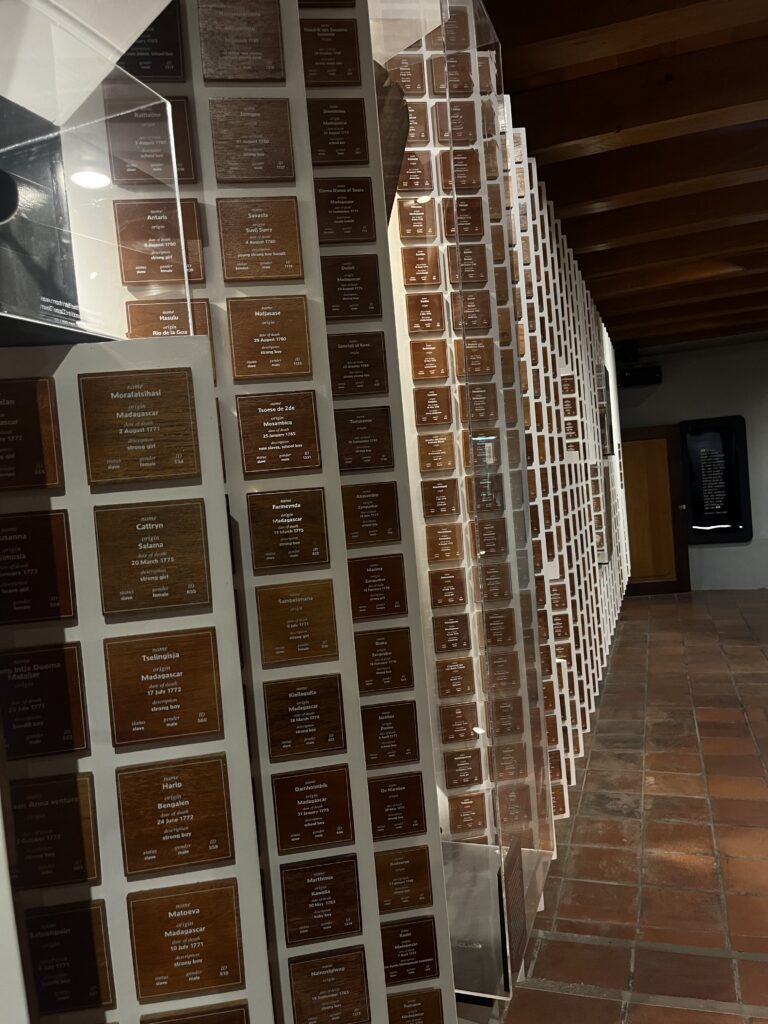
Exhibition showcasing enslaved peoples and the information of a small wooden plaque