


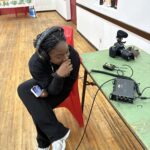


These past couple of weeks I’ve had the opportunity to participate in what I would argue is one of the most human experiences: storytelling. Right after making that claim, I Googled it, and it seems like most people on Reddit would agree. But I don’t mean that storytelling is what makes us human, or that it’s something that sets us apart from every other animal. I meannn… I doubt humans are the only species capable of some form of storytelling. To me, the “humanness” of storytelling isn’t defined by how it separates us from non-humans, but by how it makes us more human and connects us to one another.
Over the past couple of weeks, I’ve spent hours sitting across the table from strangers, listening to their stories in hopes of understanding them well enough to eventually tell a story that honored theirs. The stories I heard were from mothers and children who had battled tuberculosis. Question after question, I learned about the challenges they faced: challenges that seemed to confer an almost superhuman strength upon them. As our conversation continued, I became familiar with their mannerisms. I noticed they grew comfortable, sharing the parts of them that hadn’t surfaced at the beginning.
And although I’ve never swallowed a rifampin pill, I became familiar with its unpleasant taste through the anecdotes mothers shared, illustrating how they’d exhausted every option searching for a way to hide or diminish its aversive taste.
Through these stories, I came to understand how similar we all are in the hopes we hold on to, the faith we cling to, the fears that overwhelm us, and the pain we express. But the most memorable part of the experience was when two of the mothers thanked us and expressed how relieving it had been to simply share their stories, and it dawned on me that, for some of them, this may have been one of the few opportunities they’d had to share their stories openly. These were mothers who would do anything in their power to relieve their sick child of their burdens, often without anyone to relieve their own. One mother described how, during her son’s hospitalization, she often needed a moment to cry, but without anyone to watch him, she would retreat to the bathroom and break down, making sure that her son never saw or heard her cries.
It was as if every word they spoke was a weight they’d been carrying, and by listening to their stories, we unloaded, or sometimes shared, a small part of the burden. It made me smile to realize that an act I hadn’t thought much of, something that hadn’t taken me much effort, had an impact that was far from effortless for someone else.
As we continue to encounter setbacks and spend long hours in our hotel’s conference room trying to bring this project to life, I return to these moments that our project has given me.