



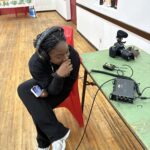

Filming our first official interview today (yay!!) reminded of the several people whose stories ultimately were not included in the final story. Even though we were not able to film everyone, those conversations still shaped how I understood tuberculosis and the challenges surrounding treatment.
One of the first people we interviewed was a mother whose young son was diagnosed with multidrug-resistant tuberculosis, or MDR-TB, when he was three years old. She described how difficult it was to give him his medication. Because he was too young to swallow the tablets, they had to be crushed, mixed with water, and given through a syringe. One of the medications was especially bitter and yellow in color, and over time, her son began to recognize it. He would run away when he saw it and sometimes had to be held still while she gave it to him. She told us that he would sometimes say, “Mommy, you don’t like me,” because he did not understand why she was forcing him to take something that tasted so bad. That part of the interview stayed with me. Before speaking with her, I understood treatment mainly in terms of adherence, side effects, and access to medication. She helped me see what treatment can look like inside a family, especially when the patient is a young child. She was not only responsible for making sure he completed treatment, but also for maintaining his trust and caring for him while he was afraid and uncomfortable. Later, after her son and mother had completed treatment, she was also diagnosed with MDR-TB. She had to manage her own illness while continuing to care for her son and maintain her job. She described taking many tablets at once, dealing with nausea and exhaustion, and trying to balance clinic visits with a workplace that was not always understanding.
What stood out to me most was how practical her hopes were. She wanted better medication for children, such as flavored syrups, gummies, or other formulations that would be easier for them to take. She chose to share her story because she hoped it might help improve treatment for another child. Although her story did not become part of the final documentary, I am grateful that we had the chance to hear it. Her interview reminded me that the burden of TB treatment is not limited to the disease itself. It also affects routines, relationships, work, caregiving, and the small decisions families have to make every day.
Another person we interviewed was a mother whose story challenged many of my assumptions about how socioeconomic factors affected health. When she was a child, she had tuberculosis herself. The most jarring part of her interview was when she told us that when she was diagnosed, she was excited. Her father struggled with substance use, there was often little food at home, and receiving TB treatment meant that the clinic provided meals alongside her medication. As a child, she associated her diagnosis with the certainty that she would be able to eat. It was a reminder that diseases like TB do not exist in isolation. They intersect with poverty, food insecurity, family circumstances, and the realities of daily life.
Years later, after losing both of her parents as a teenager, she became the primary caregiver for her younger siblings. Today, she is raising her own daughter while continuing to support her family. Throughout our conversation, one thing became clear. She refuses to stop advocating for the people she loves as she wished someone would advocate for her when she was younger. She laughed as she admitted that she often argues with healthcare workers. If she believes something is wrong with one of her children, she keeps asking questions until someone listens. She told us that there were times when her concerns were dismissed at clinics, but she trusted her instincts and kept pushing for answers. That persistence made a difference. It led to her daughter being diagnosed with tuberculosis early, allowing treatment to begin before the disease became much more severe.
By the end of our interview, she wasn’t talking about herself anymore. She spoke instead about what she hopes will change for the next generation. She wants children to learn about TB in school. She wants them to learn not only what it is, but how it spreads and why early treatment matters. She talked about young people sharing cigarettes or using drugs together without realizing the risk of transmitting TB, and she believes education could prevent many of those infections before they happen. I left our conversation thinking about how often we talk about patient advocacy in healthcare and how I often thought about it through the lens of organizations and NGOs. These interviews did more than inform our final film. They changed the way I view TB treatment and the work DTTC does.