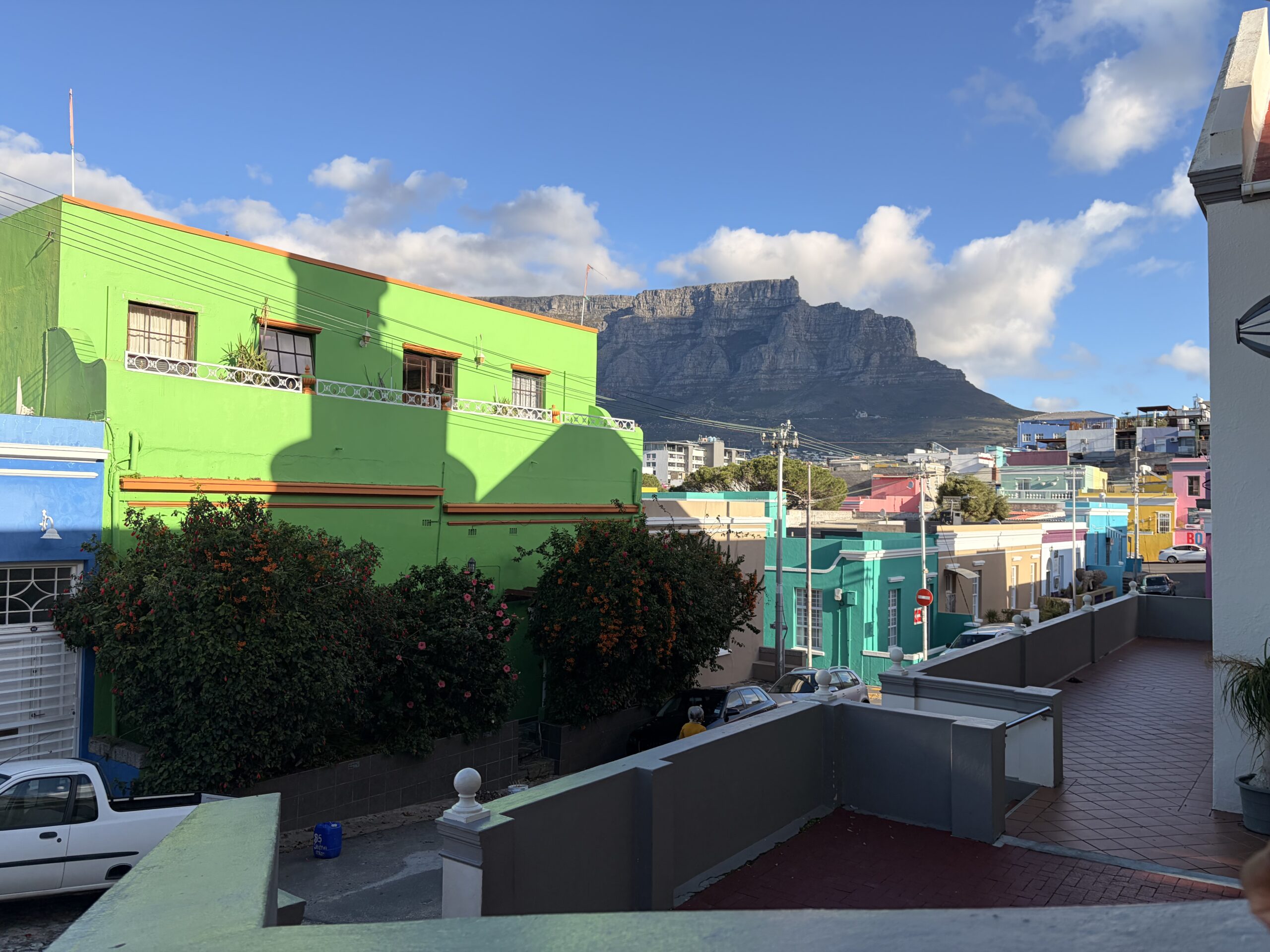





Just above the Central Business District (CBD) and beneath the echoes of the noon gun fired from Signal Hill lies one of the oldest residential areas in Cape Town: Bo-Kaap. Bo-Kaap originally comprised small white-painted houses that were rented to enslaved individuals from Malaysia, Indonesia, and Africa. When the enslaved residents gained their freedom, they purchased the homes and painted them in vibrant colors as a symbol of their liberation. Today, the bright, boldly colored houses make Bo-Kaap seem like a neighborhood straight out of a Dr. Seuss story and have made it a popular destination for visitors.
Apart from its beautifully colored houses, Bo-Kaap is also known for the Atlas Trading Company, a spice shop famous for selling fresh spices and other ingredients. The most memorable item for me was the Father-in-Law Masala: a blend of cumin, coriander, turmeric, cinnamon, chili powder, and other spices that created a delicious seasoning for chicken curry: a Cape Malay staple which we prepared and enjoyed during the Bo-Kaap Cooking Tour.
But beneath the beauty of the colorful houses and the calming sound of the Adhan, the Muslim call to prayer, I sensed an undercurrent of loss that grew more pronounced on my second visit. Our tour guide had spoken about the effects of gentrification, explaining how rising home prices had made it increasingly difficult for longtime residents to remain in Bo-Kaap, forcing many to leave. He told us that the streets of Bo-Kaap were once filled with children playing, but as new buyers bought homes, they began complaining about the noise. Now, there were hardly any children playing outside. Even the chandeliers inside the houses flickered, their power strained by the construction of nearby high-rise apartments.
Bo-Kaap made me wonder how much of a place’s history and culture can disappear while its colorful facades continue to draw visitors like me.