




While we were watching the South Africa vs. Canada soccer match at Time Out Market this past Sunday, Sam mentioned something I had never heard of before: a World Cup that includes stateless nations. Hearing the word “stateless” in the context of soccer surprised me and immediately brought me back to what we learned at the World Refugee Symposium.
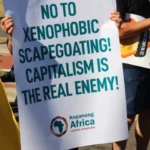
Just a week earlier, our class spent the day at the symposium hosted by Shirley Gunn, where much of the discussion centered on statelessness and what it means to exist without citizenship. Although stateless people and stateless nations are different concepts, hearing the same word in such a different context made me think about their similarities. Central to both concepts are the ideas of recognition and what it means to belong.
A stateless person lacks citizenship and the legal recognition that comes with it. A stateless nation is a group of people who share a common history, language, or identity, but do not have a sovereign state of their own. They are different, but both show how deeply recognition shapes belonging. I looked into the World Football Cup and learned about the Confederation of Independent Football Associations (CONIFA), an organization founded in 2013 to create an international stage for communities that cannot compete in FIFA. Members of the organization include stateless nations, geographically isolated territories, and ethnic minority groups from around the world.
The more I read, the more I realized the World Football Cup isn’t simply another World Cup. Unlike FIFA, where participation depends on international recognition, CONIFA creates space for groups that have been excluded from the global playing field. Many of its teams rely mostly on crowdfunding just to be able to compete. Some players even meet one another for the first time just right before the games begin. Regardless, the players still walk onto the field representing communities they are proud to call their own.
That is so powerful.
Just like the perspectives we heard at the symposium challenged me to think about the consequences of living without any governmental recognition, learning about CONIFA challenged me to think about the hardships that communities without international recognition face. While “acceptable” recognition comes from governments, true belonging is built by the people in a community. CONIFA allows for a beautiful celebration of communities whose hardships and capabilities are often overlooked. This league serves as a reminder that sports can be a powerful way to maintain culture and express identity,
Links to articles:
https://www.newyorker.com/sports/sporting-scene/the-world-cup-for-forgotten-nations
https://www.bbc.com/news/world-asia-36429207
Link for reference photo: