



Why was one of our first collective decisions in Cape Town have seemingly nothing to do with public health or filmmaking, but instead was to create an Instagram account called capetown.eats?
It seemed almost natural that we do so. Every day someone discovers a new café, or restaurant that everyone else “has to try.” We give extensive reviews on each dish and ask each other questions like “Okay, but was it better than The Atlantic Express?” our unanimous favorite in the informal ranking we’ve been building throughout our time in Cape Town.
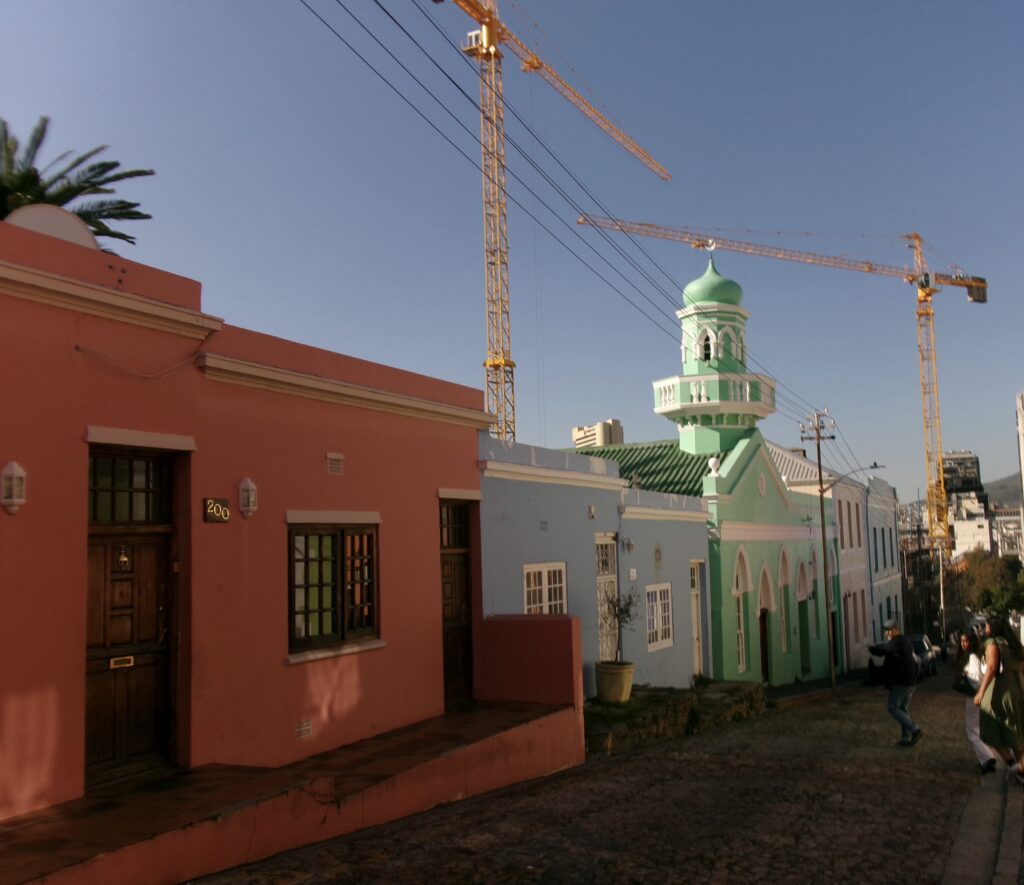
One reason for this could be that as tourists, food is almost always used as a shorthand for travel. We say things like “the food in Italy was amazing” as we use food to map our travels. Yet, we rarely realize that tasting the food in a new place means swallowing its history, a much heavier task than snapping a post-worthy image. For me, this connection began in Bo-Kaap on what was supposed to be a simple cooking tour but turned into a glimpse into how food shapes family, resistance, and belonging. As we watched our instructors show us how to make the masala, the aroma of the spice blend pulled us back in time. We were witnessing the birth of a dish made from displacement, clinging onto the preserved pieces of home while creating something entirely new.
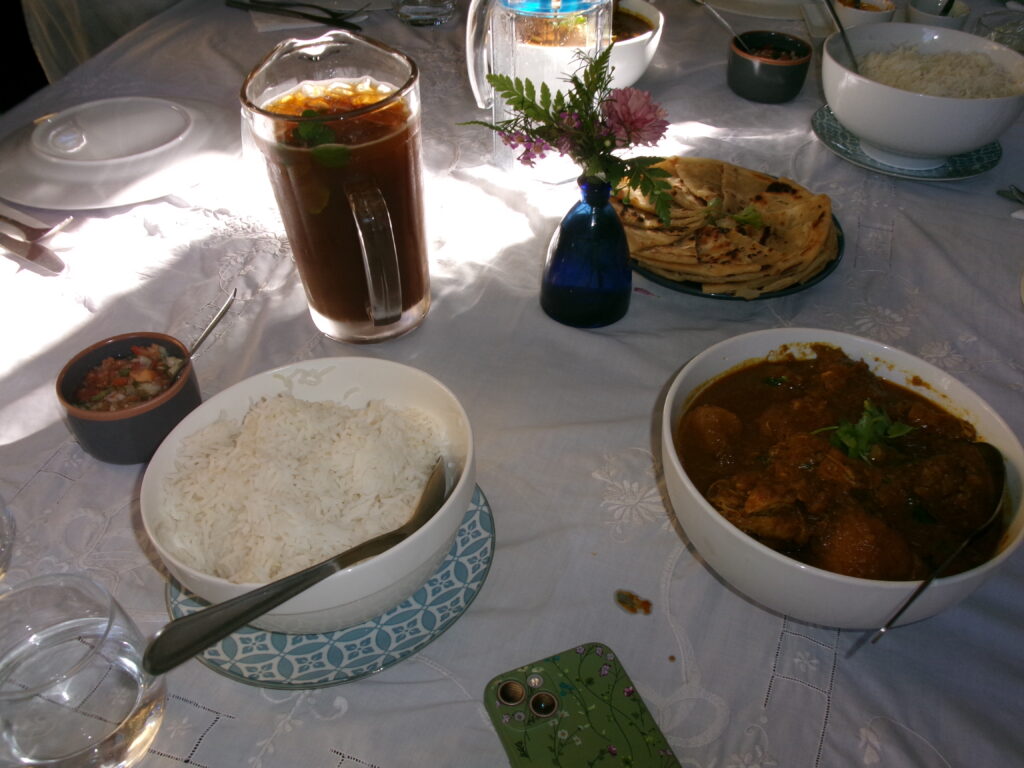
Here in South Africa, those preserved pieces of home become a lifeline that turns food into a refuge in areas where the migrant and refugees population are high. During the symposium at the Human Rights Media Centre for World Refugee Day, one of the panelists shared a thought that has stayed with me. She loosely described that when people are forced to leave their homes, recipes often travel when almost nothing else can. This reminded me of my own mother. Years ago, as she prepared us to travel across the globe to the US, she tucked a worn, yellow notebook filled with handwritten recipes from her mother and sisters right among the meticulously folded clothes. She guarded this notebook as carefully as any passport or legal document. Within its tattered pages, the memories of the people she loved were frozen, preserved in blue ink. Years later, those recipes comforted us with familiar aromas, transforming the unfamiliar cold winter nights of North Dakota into one that felt, at least for a moment, like home.
This made me question what we choose to eat on a day-to-day basis as tourists. Food serves a purpose far beyond basic nutritional value and experiencing a curated sit down restaurant can make us lose sight of histories, communities, and traditions that shape it. On the boat ride to Robben Island, I met Victor, who had immigrated from Nigeria. We shared our thoughts about Cape Town and about the food, and he intensely described that the restaurants marketed to tourists as serving “African food” tend to reduce an entire continent’s incredible diversity into a single, curated experience. Perhaps that’s why I found the Bo-Kaap cooking tour so intimate. There was a vulnerability in stepping into someone’s home and helping prepare a homemade meal, rather than simply sitting down to consume it. The curtain of constructed authenticity lifted to reveal the raw, untold reality of a living kitchen in the backdrop of a multigenerational household where the instructor and her child weaved in between the tables we kneaded our dough on.
Victor’s comment made me reconsider our own role as visitors. Are we collecting meals, or learning stories? Perhaps these two cannot be understood independently of one another and our walk through the prison showcased this co-dependency. For the prisoners, food was never simply nourishment. Under apartheid, it became another instrument of control. Prisoners were fed according to racial classifications: white prisoners received larger and more frequent portions of meat than Black African prisoners, whose diets were intentionally more restricted. Food has always reflected power. It’s used to control who eats, what they eat, where they eat, and even who they eat with. But food has also been a form of resilience, a communities’ yearning showcase what can never be taken from them and for the people of Bo-Kaap, it remains a sanctuary even the rumble of construction cannot shatter.
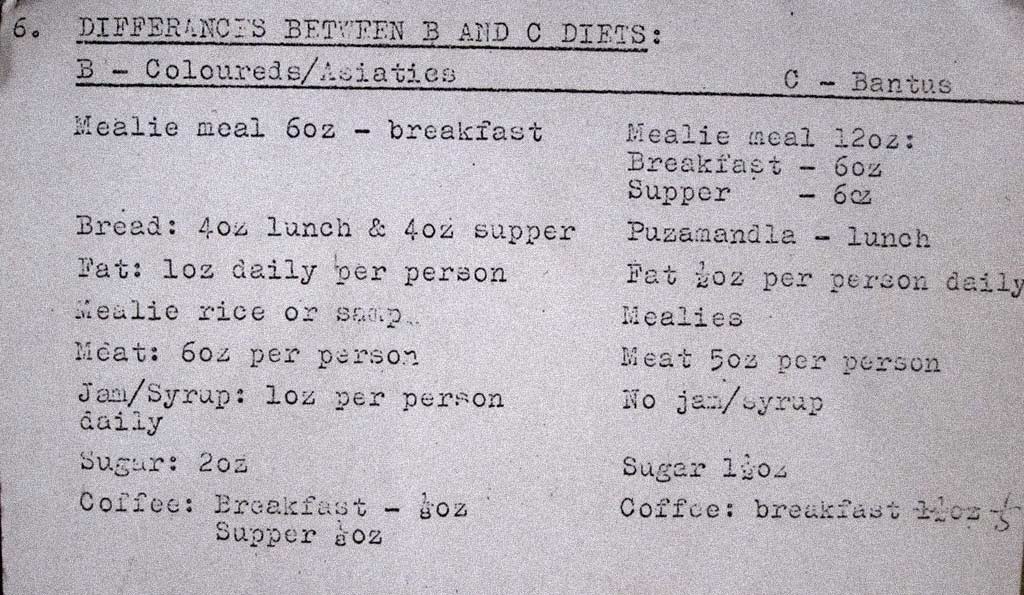
Archival record of racially differentiated food rations at Robben Island Prison. Courtesy to Robben Island Musuem
In the context of this reflection, our cohort’s fascination with Cape Town’s food scene is understandable. We aren’t just looking for good restaurants. We are searching for a way to understand a city whose history is written into its kitchens, markets, neighborhoods, and family recipes. As students interested in global health, we often discuss food in terms of nutrition, food insecurity, or chronic disease in the discussions we have and while those conversations are essential, Cape Town has shown me that food is also political. It reveals who has access, who is excluded, and how communities adapt in the face of injustice.
Maybe that’s why we created CapeTownEats. It isn’t just an Instagram account about food. It is an attempt (whether we knew it or not) to document the stories, histories, and communities we are beginning to know. We are realizing that sometimes the most honest measure of understanding a new place isn’t by description of what we saw or did but in the way we reply to questions like “What did you eat there?”